So instead of writing a last blog about Richard III. I wish to do a different approach and write about my experience on production blogs and why?
I know this isn't part of the assignment and may cause me to lose some points, but flip it. It's my production blog and I will write whatever I wish too.
So this assignment is actually really cool. It's not like other research assignments we get on, "hey read an article, do a review." No we actually get to research on a topic of our interest. Sure, we get a main topic, but we break that down.
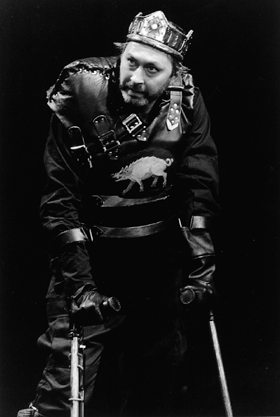
To be honest, I didn't have a play solified until Wednesday and went straight back to the drawing board. Jen mentioned as we spoke in class on what the Hunchback related too. Her statement in class "Did shakespeare write about a hunchback?" My internal process instantly jumped "Richard!" Yeah! I was right? Wait!? I was right? How did I know that? Duh, you saw that years ago and it was one of your favorites. So good that after the show I waited outside leading a group of people to see if we could run into the main actor who played Richard III.
His name was James Comb and a professor and player of the Oregon Shakespeare Festival. It was awesome speaking to him even though he literally was the last actor to leave the theatre. He spoke of Richards character and how he determined his movement like a mechanical spider who was waiting to strike. Just waitng. I loved everything he did with Richard and the production was glorious.
After posting a few blogs I began to realized that this is probably the same work that James would do for his character alone. He didn't have to worry about the other fields, but he would become obsessed with playing the most villaineous character of them all.
So we as actors/playwrights/whatever we will be, need to know that the history of our plays/productions. Why? Because there will always be a bigger and better picture if we just take the time and look closer.
Thank you for all the good times in TH History. It has shown me there was history in theatre.
One love
Source
My heart
Friday, March 11, 2011

The last Sinister LOOK
 I am obsessed with the villain concept of Richard III. He isn't a super villain looking for havoc for others, but he wants what he wants. That's what makes him so awesome. Others wish to wreak havoc upon the world, but what Richard does is he grows the evil in himself and that what deforms him more.
In the Journal artical Sinister Aesthetics of Shakespeare's Richard III by Joel Slotkin speaks the audience fascination with Richard III. How manipulating his ways are and if he reflects the power onstage, the audience will be intune to who Richard really was. They in thought, should see pass the hunch and know Richard real intentions.
How cool and evil.
Slotkin, Joel Elliot. "Honey Toad: Sinister Aesthetics of Shakespeare's Richard
III." Journal for Early Modern Culture Studies 7.1 (2007): 5-32. Web. 11
Mar 2011.
<http://muse.jhu.edu.ezp.lib.cwu.edu/journals/journal_for_early_modern_cultural_studies/v007/7.1slotkin.html>.
Clarence Monologue (video)
There is one monologue who sets apart from Richard himself and that is Clarence. Clarence is on his way to a certain death. He speaks of a dream he had the night before. It was a dream of him falling from a ship into water and there he saw a thousand dead men. The fish nawing from the dead and the sound he could not stand even if the water had filled his ears. This is him alone wishing the dream he had was never there.
This was his foreshadowing to his doom. So whoever takes on this role needs to undertake the dream itself. It reflects his guilt of helping Richard to power. As the dead are already suffering in the depths of the water, fate shall give Clarence what he really deserves.
http://www.youtube.com/watch?v=UTFT-_ZOBPQ
This was his foreshadowing to his doom. So whoever takes on this role needs to undertake the dream itself. It reflects his guilt of helping Richard to power. As the dead are already suffering in the depths of the water, fate shall give Clarence what he really deserves.
http://www.youtube.com/watch?v=UTFT-_ZOBPQ
What is the Tower?

 I remember back in 2006 when witnessing a performance of Richard III at the Oregon Shakespeare Festival. The tower was shown as a stairwell down into a lit tunnel as everything surrounded it was in dark. It was a great way to portray a place of death. This tower only meant death and everytime someone was sent they would exit the stage in the manner as the actor before.
How would we determine this tower? One thing that should send chill down the audience spine is the person themselves getting sent to their death. There has to be a connection in the way the death occurs. Give the audience a little bit of guilt for not doing anything, so could this tower be an ascension into the audience? More has to be thought over on how we can leave the haunting thoughts of the dead into peoples mind.
Source:
"Princes in the Tower" Oxford Dictionary of English. Edited by Angus Stevenson. Oxford University Press, 2010. Oxford Reference Online. Oxford University Press. Central Washington University. 11 March 2011 <http://www.oxfordreference.com/views/ENTRY.html?subview=Main&entry=t140.e0662070>
Interpreting the revived review
 When determining how to take Richard III for the audience, there are plenty of reviews out there ready and willing to tell how a person should react to Richard III. For instance, there a nice review in A Source Book In Theatricak History edited by A.M. Nagler.
It documents a follower of Kean. Kean, renowned for his interpretations of Shakespearean tragic roles, notably those of Macbeth and Iago. The follower reacts to 3 different times he attended Kean's performance of Richard III. He states in the first viewing Kean had moments where he felt the authenticity of the speech, but at most Kean had fail to come across. The 2nd performance, he begins to sound like a director wondering why Kean had change most of his performance, speaking faster at parts and slower at others. The last showing he says Kean has become a master at performing the role, he strikes almost every element believable to make Richard which helps the other performers, such as Anna.
This is great to know because this performance was in the 19th century and with today's works and elements we could find the power of the performance to get a review like this on the first try.
Source:
Nagler, A.M. "Edmund Kean's Richard III." A Source Book In Theatrical
History. New York: Dover Publication Inc., 1952. Print.
Prequel: The War of the Roses

He was not the king of the people and that is what killed Richard III. As history proved Richard was a king, however, as he forced himself in he himself forgot it wasn't about him. His actions of killing to get to the throne was the stepping stone for the people to question him. Even though he reigned as a king, he never lived up to what a king was suppose to be.
Before Richard III, we are casted into a war between two home which is the House of York versus the House of Lancaster. For some, war is an act of its own. So the grittyness should show how it effecting the enviroment around people, however, to Richard war is another game to him for his real game is to collect what he wants.
For more information on the war check out this book:

Hubert, Cole. The War of the Roses. London: Hart Davis MacGibbon, 1973.
Print.
the civil wars in England during the 15th century arising from the dynastic struggle between the followers of the House of York (with the white rose as its emblem) and the House of Lancaster (with the red rose) during the reigns of Henry VI (reigned 1422–61 and 1470–1), Edward IV (reigned 1461–83), and Richard III (reigned 1483–85).
It reflects how the war inflicted on the houses and crosses over between the thoughts of the kingdoms. War reflects on its leader, but Richard did not reflect the war himself. He thought he could buy his way to power, but when Richmond comes into the picture, he defeats Richard and the land is united.
Analyzing the Villain
In the last post, it was mentioned shakespeare interpretation of Richard as the monstrous ruler who gain controlled by forcing himself in. It's a play that creates this person for audience viewing. There is another great interpretation of how the villain of Richard could be portrayed:

This is the famous portraiture of Richard III which was given to the National Portrait Gallery London in 1862. This interpretation takes Richard to a whole new level of monster. Even though we know what happens to Richard, we forget what drove him before the madness took over. Here we see a calm-blanked face man who's only energy is in his hands. He seems to be playing with one of his rings and that could be taken as his planning for wealth or other plans. This could be a help to any actor who needs to see what other uglies are in Richard besides the physical attributes of him.
sources:
image: bing - richard III
http://www.richardiii.net/r3_man_portraits.htm
This is the famous portraiture of Richard III which was given to the National Portrait Gallery London in 1862. This interpretation takes Richard to a whole new level of monster. Even though we know what happens to Richard, we forget what drove him before the madness took over. Here we see a calm-blanked face man who's only energy is in his hands. He seems to be playing with one of his rings and that could be taken as his planning for wealth or other plans. This could be a help to any actor who needs to see what other uglies are in Richard besides the physical attributes of him.
sources:
image: bing - richard III
http://www.richardiii.net/r3_man_portraits.htm
The History Restoration of Richard III, not Shakespeare
Richard III is a dark, fantastic, and twisted interpretation of history, however, as time travels throughout history people do forget it's only a play and we must view history for what it was. Richard had a tough life and was not born out of the womb as a monter. As before, the power was tranforming the man and that is what is usually highlighted in the play. It helps sell the play a the dark vision of a ruler.
 Even though it is great to see a hunchback rise only to fall because he did not see the light in what he ruled. This is not true according to Oxford Reference Online, "He made repeated progresses to gather support, established a Council of the North, set up the College of Heralds, and gave as generously as he could to the church and the universities" (ORO Richard III). This would be a king trying to give back to his people. Beng a ruler of the land. However, it is noted he did it to gain support for he was still seen as a ruler who force himself in. This was not good for him. As shakespeare writes, I feel the audience wouldn't really know the timeline of Richard for he ruled for more than 3 years, which isn't that good but he stilled rule.
The play highlights his darkness but not his reality reign. Another excerpt from ORO, " The stories of his monstrous birth, hunched back, long hair, and teeth—so deformed ‘that dogs bark at me as I halt by them’—were spread subsequently by writers in the Tudor period, who had no reason to cherish losers" (ORO Richard III).
Sources:
"Richard III" The Kings and Queens of Britain. John Cannon and Anne Hargreaves. Oxford University Press, 2009. Oxford Reference Online. Oxford University Press. Central Washington University. 11 March 2011 <http://www.oxfordreference.com/views/ENTRY.html?subview=Main&entry=t44.e259>
 Even though it is great to see a hunchback rise only to fall because he did not see the light in what he ruled. This is not true according to Oxford Reference Online, "He made repeated progresses to gather support, established a Council of the North, set up the College of Heralds, and gave as generously as he could to the church and the universities" (ORO Richard III). This would be a king trying to give back to his people. Beng a ruler of the land. However, it is noted he did it to gain support for he was still seen as a ruler who force himself in. This was not good for him. As shakespeare writes, I feel the audience wouldn't really know the timeline of Richard for he ruled for more than 3 years, which isn't that good but he stilled rule.
The play highlights his darkness but not his reality reign. Another excerpt from ORO, " The stories of his monstrous birth, hunched back, long hair, and teeth—so deformed ‘that dogs bark at me as I halt by them’—were spread subsequently by writers in the Tudor period, who had no reason to cherish losers" (ORO Richard III).
Sources:
"Richard III" The Kings and Queens of Britain. John Cannon and Anne Hargreaves. Oxford University Press, 2009. Oxford Reference Online. Oxford University Press. Central Washington University. 11 March 2011 <http://www.oxfordreference.com/views/ENTRY.html?subview=Main&entry=t44.e259>
Thursday, March 10, 2011
The Beginning: Richard III- Production Blog
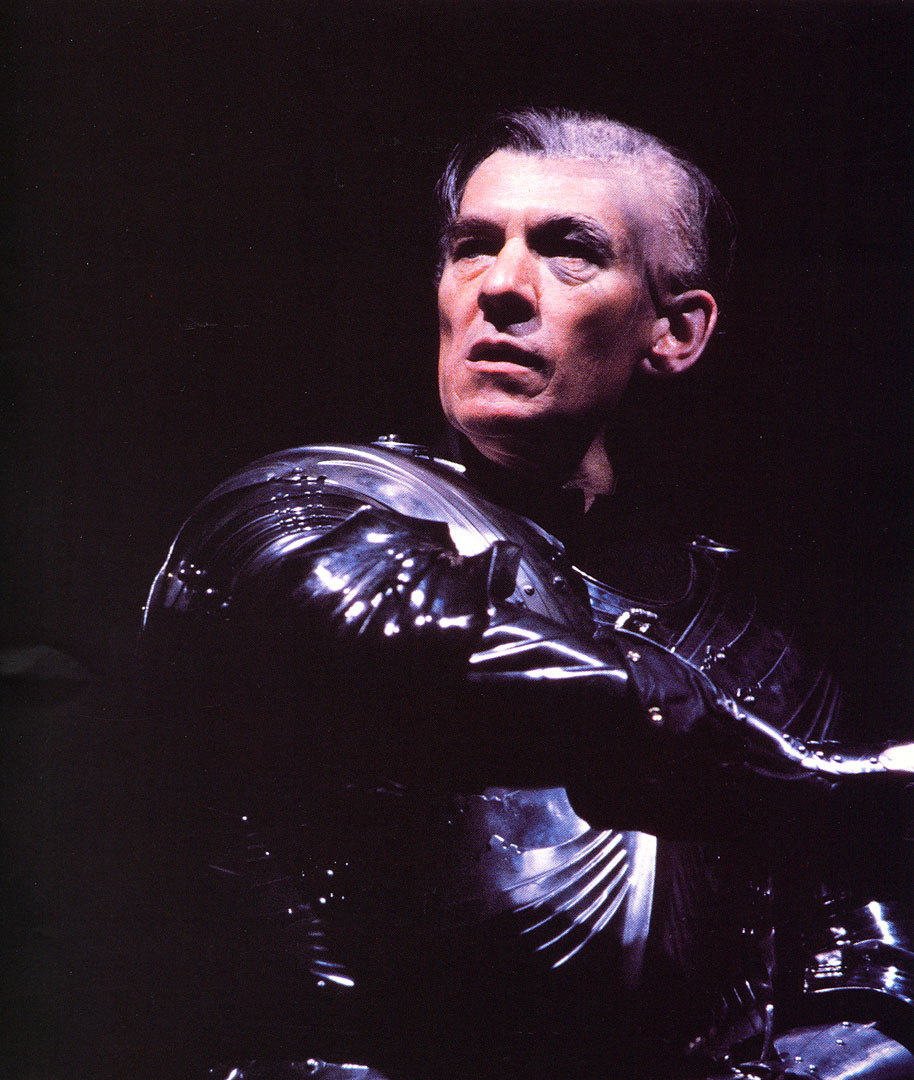 His body deformed and hunched, he destroyed everything which loved him. The powerful and dark play Richard III written by William Shakespeare is the story of Richard III who was a Duke, a hunchback, and a man who let the power take over him. As the play progresses, so does the darkness of Richard, as he witnesses others rise to power, he plots against them. These people only understand Richard III as their friend or family, Richard does not see it that way, his quest for power to impress his brothers widow shadows all of it, so he sends them to the brig essentially the "tower."
Act II begins with Richard III reaching the highest rank of King. He now craves only his brothers widow, however, she will not have him and this begins his downfall. In a nightmare sequence, Richard speaks of the dead he has killed and sees may of them. It begins to haunt him and as soon as he wakes at sunrise Richmond invades England which Richard "allies" have no corrall over. Richard most famous line "A horse, A horse, my kingdom for a horse " (Shakespear 304). Richard fightss Richmond; Richmond is victorious and he is declared King then become Henry VII.
This is the play. The darkness of Richard III. The beginning.
Sources:
Shakespeare, William. Richard III. New York: Pocket Books, 1996. 1-306.
Print.
Subscribe to:
Comments (Atom)